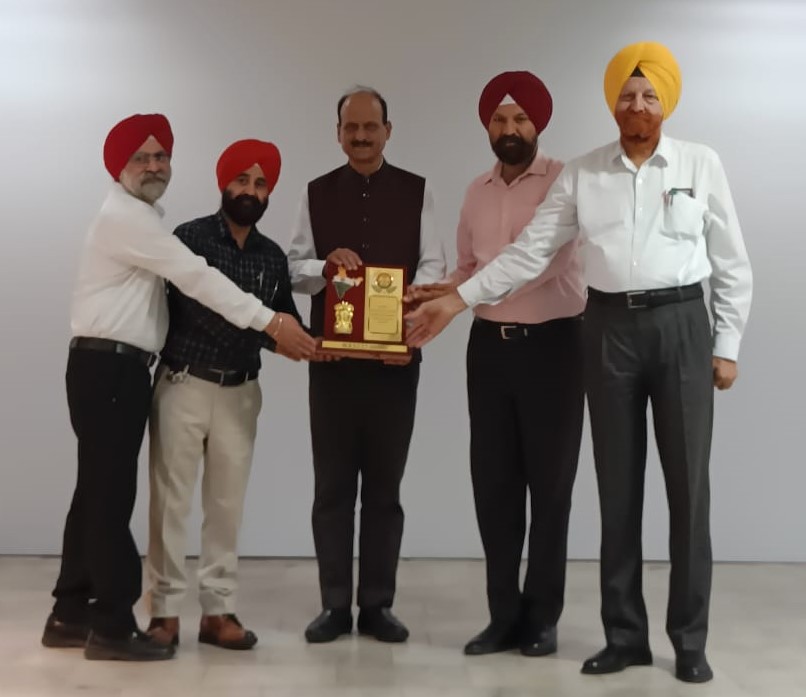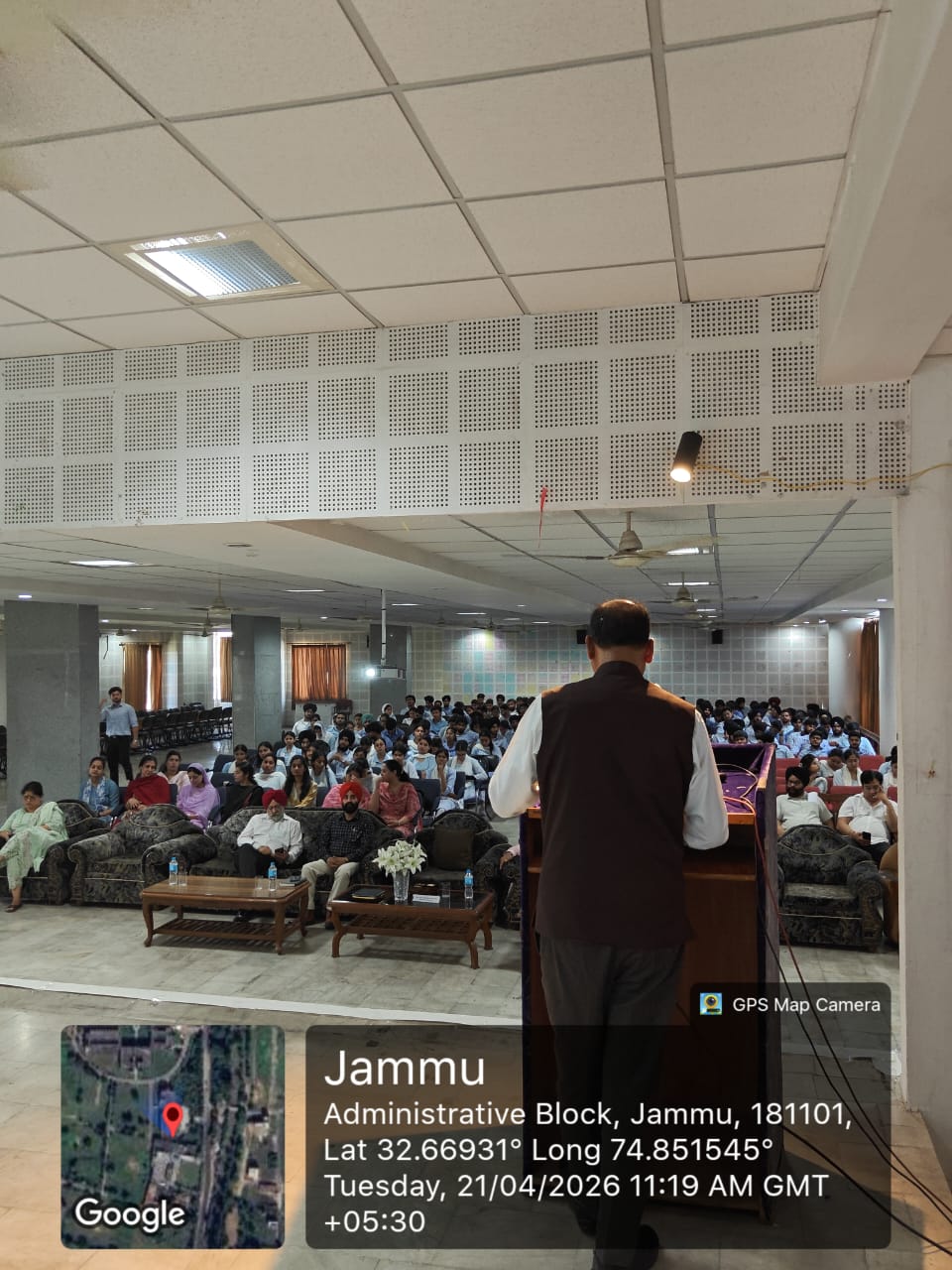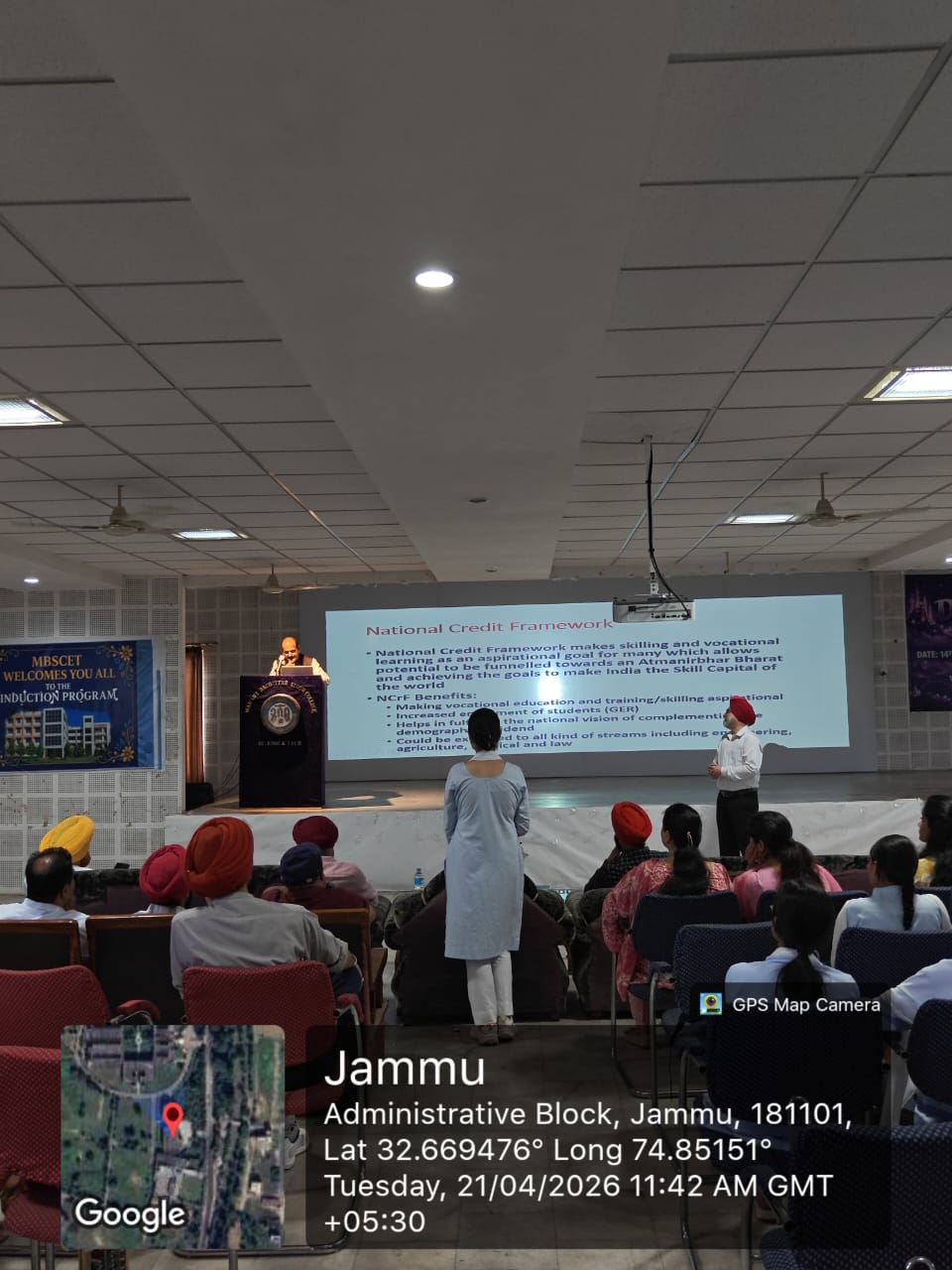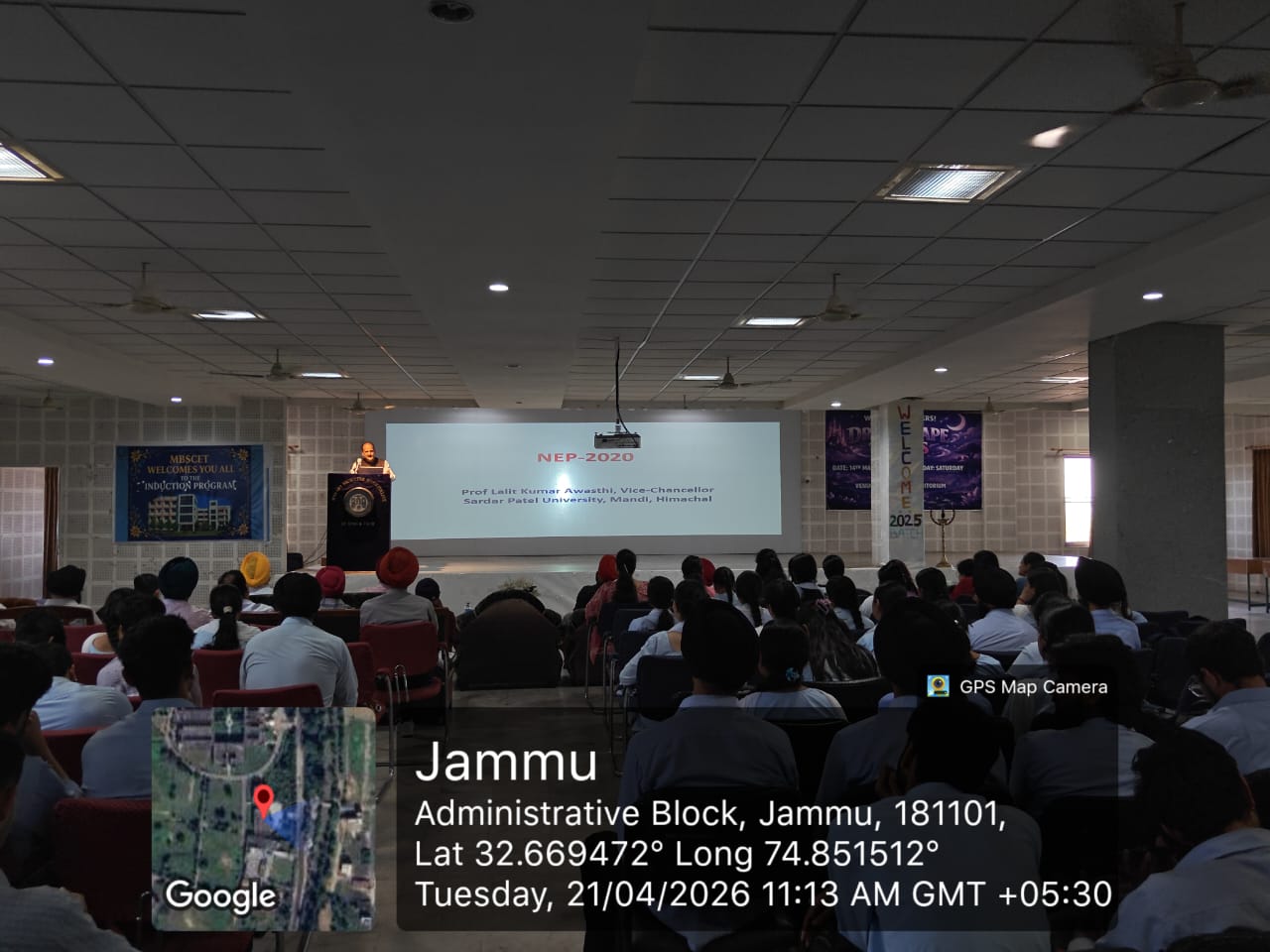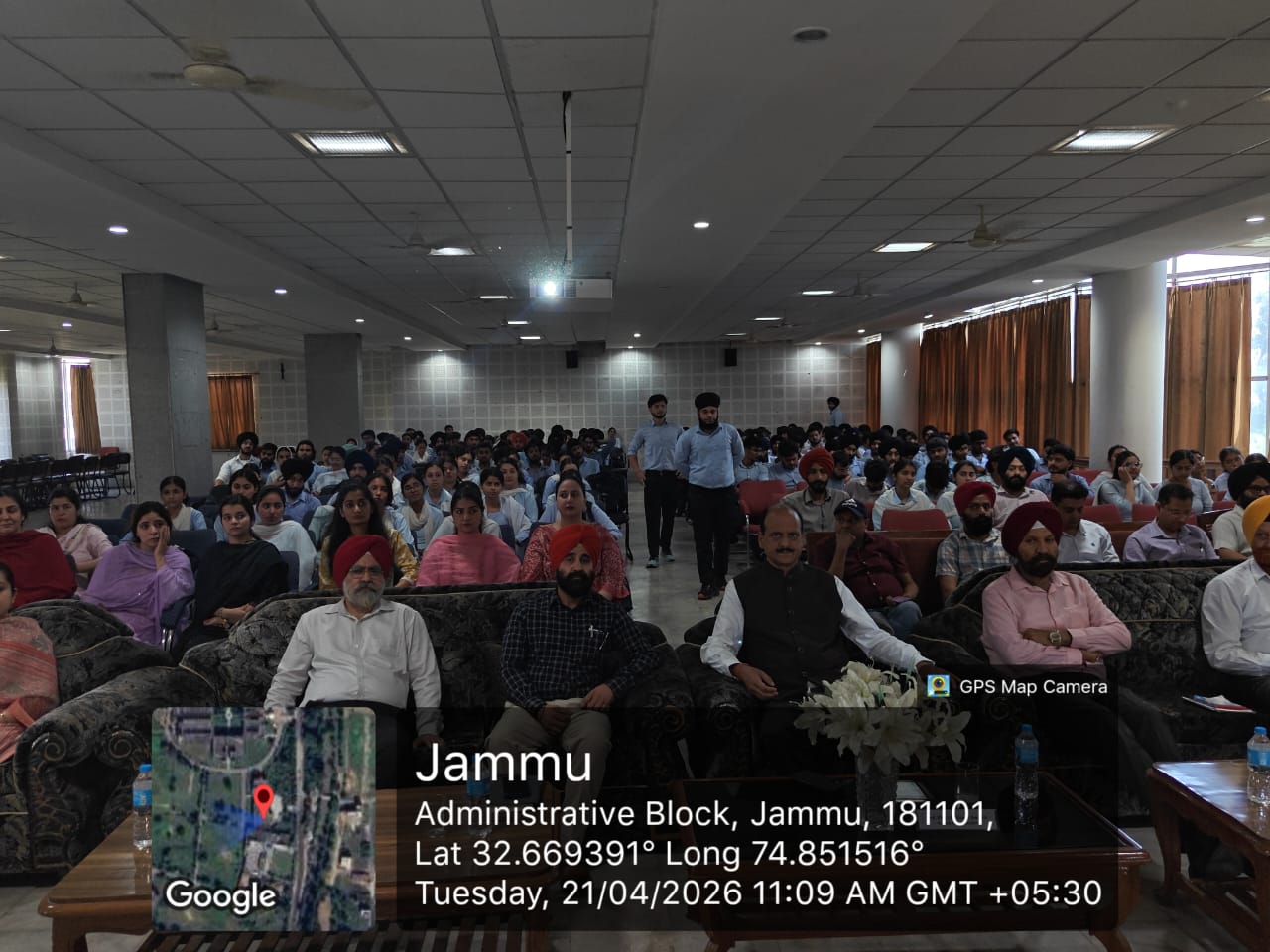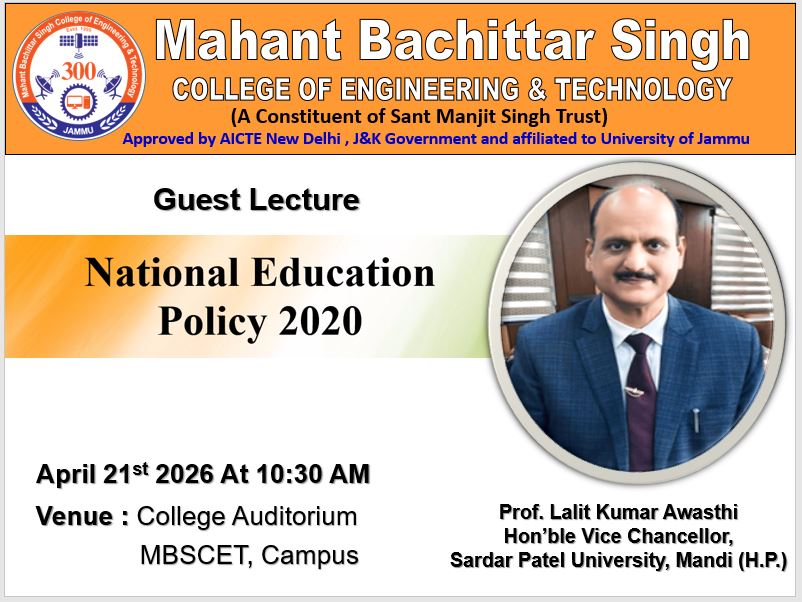
Jammu, April 21, 2026: Mahant Bachittar Singh College of Engineering and Technology, Jammu organized a guest lecture by Prof. (Dr.) Lalit Kumar Awasthi, Hon’ble Vice Chancellor, Sardar Patel University, Mandi(HP), focusing on the implementation and impact of the National Education Policy 2020.
The event commenced with a welcome address by Prof. Shalini Sharma, who greeted the distinguished guest and emphasized the significance of the session.
Addressing an audience of over 400 students and faculty members, Prof. Awasthi outlined the policy’s vision of building an education system rooted in Indian ethos while aligned with global standards. He emphasized key pillars such as multidisciplinary learning, critical thinking, inclusivity, and digital integration aimed at transforming India into a knowledge-driven society.
Highlighting ongoing initiatives under NEP 2020, he referred to digital platforms such as DIKSHA, PM eVIDYA, SWAYAM, and NPTEL, along with teacher training programs like NISHTHA. He also discussed inclusive education initiatives such as PRASHAST.
The lecture covered significant reforms including competency-based assessment systems, reduced emphasis on rote learning, holistic and multilingual education, and structural changes such as the 5+3+3+4 model and flexible higher education pathways supported by the Academic Bank of Credits and National Credit Framework.
Addressing implementation challenges, Prof. Awasthi highlighted the need to strengthen teacher training, bridge infrastructure gaps, effectively integrate technology, and ensure continuous monitoring and funding support.
Prof. (Dr.) Amrik Singh (Principal), in his address, extended his gratitude to Dr. Awasthi and remarked that NEP 2020 has transformed the Indian education system, making it more flexible, skill-oriented, and multidisciplinary.
The lecture was conducted in the presence of Prof. (Dr.) Rajinder Singh (Administrator), Prof. Parveen Singh (Dean Academic), Hardip Singh Gill (DSW), Heads of Departments, and other faculty members.
The session concluded with an interactive discussion, with students expressing optimism about the future of education and enthusiasm for the opportunities enabled by the policy. The formal proceedings ended with a vote of thanks delivered by Dr. Amrik Singh, and the session was ably anchored by Prof. Shalini Sharma.